
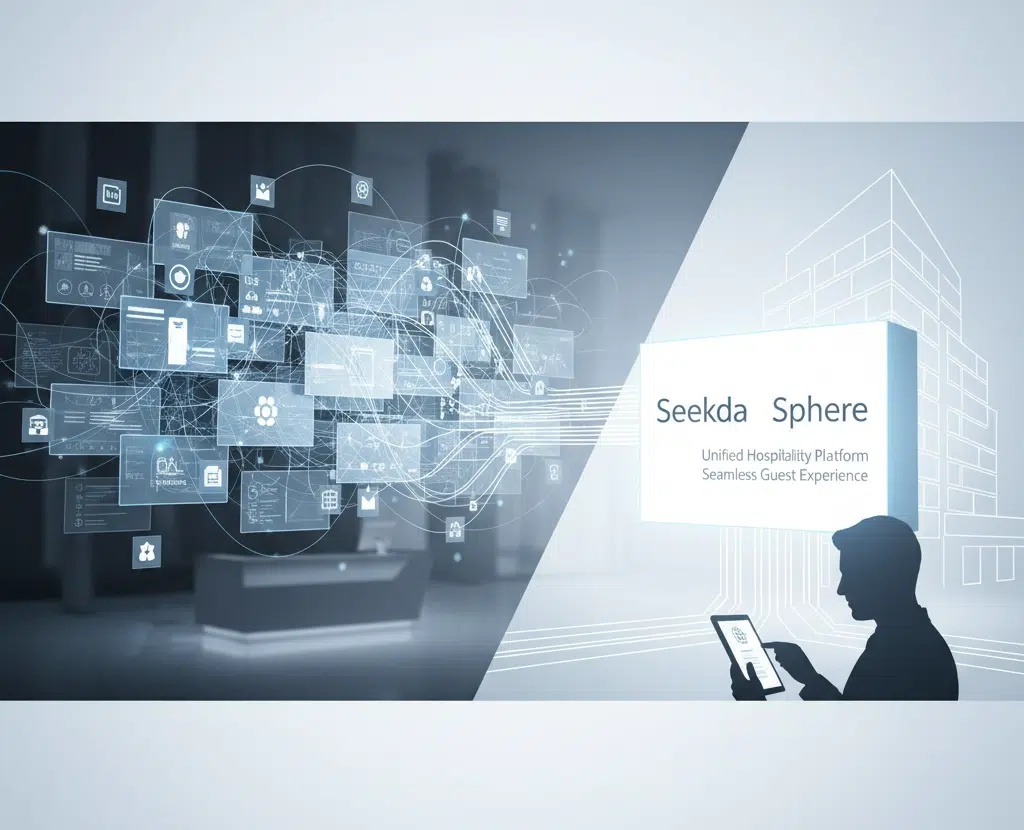

The End of Patchwork Hotel Tech
Hotel technology has come a long way. From handwritten ledgers to cloud-based systems, from manual reservations to automated guest experiences. But while innovation has accelerated, many hotels still operate with fragmented tools that don’t talk to each other.
Revenue management, PMS, channel distribution, booking engines, CRM, and guest messaging often live in different silos. The result? Duplicated work, inconsistent data, and inefficiency.
Today, the most forward-thinking hoteliers are moving toward full integration. One platform that connects every part of the guest and operational journey.
The Fragmented Past: When “Best-of-Breed” Meant “Best-in-Class”
For years, hotels adopted the “best-of-breed” strategy, choosing the best individual tool for each task:
- A PMS from one provider
- A separate Channel Manager
- A standalone IBE for direct bookings
- A third-party CRM for guest communication
- Additional vendors for reputation, housekeeping, or upselling
Initially, this made sense. It allowed hotels to plug in the newest tools as they emerged. But as the ecosystem grew, complexity skyrocketed. Integrations became fragile, data synchronization failed, and system management became a full-time job.
The result: technology designed to make life easier often made it harder.
The Shift: Why Integration Became the New Priority
Modern hoteliers no longer want to manage dozens of tools. They want one ecosystem that works seamlessly. Several industry trends accelerated this shift:
- Cloud-based Architecture: Systems moved online, making real-time connectivity and API integrations easier than ever.
- AI and Automation: AI needs unified data to deliver personalized experiences and smart recommendations. Fragmented systems block that potential.
- Guest-Centric Operations: Travelers expect a smooth journey, from first search to post-stay follow-up, requiring connected data.
- Cost & Efficiency Pressures: Managing multiple vendors and contracts drains budgets and time.
- Multi-Property Management: Chains and soft brands need centralized control with local flexibility.
In short: integration isn’t a luxury anymore; it’s a necessity.
What Full Integration Looks Like Today
A fully integrated hotel platform unites operations, sales, distribution, and guest engagement in one environment.
Key elements include:
- Property Management (PMS): Central command for reservations, housekeeping, billing, and analytics.
- Channel Management: Real-time OTA distribution and rate synchronization.
- Internet Booking Engine (IBE): Seamless direct bookings on brand.com with dynamic pricing.
- AI Content & Marketing Tools: Automated creation, translation, and optimization of property descriptions and campaigns.
- Guest Experience Layer: Voice concierge, chatbots, and CRM working in harmony.
- Multi-Property Management: Unified oversight for chains, soft brands, and groups.
Platforms like Seekda Sphere embody this integration, combining all these tools under one contract, one interface, and one vision.
The Role of AI in the Integrated Era
Artificial Intelligence is not just another tool. It’s the engine driving the next generation of hospitality technology.
AI enables:
- Automated Content Creation: Write, translate, and optimize descriptions instantly (Seekda AI).
- Predictive Guest Insights: Understand and anticipate guest needs before they even ask.
- Smart Distribution Decisions: Dynamic rate adjustments based on real-time demand.
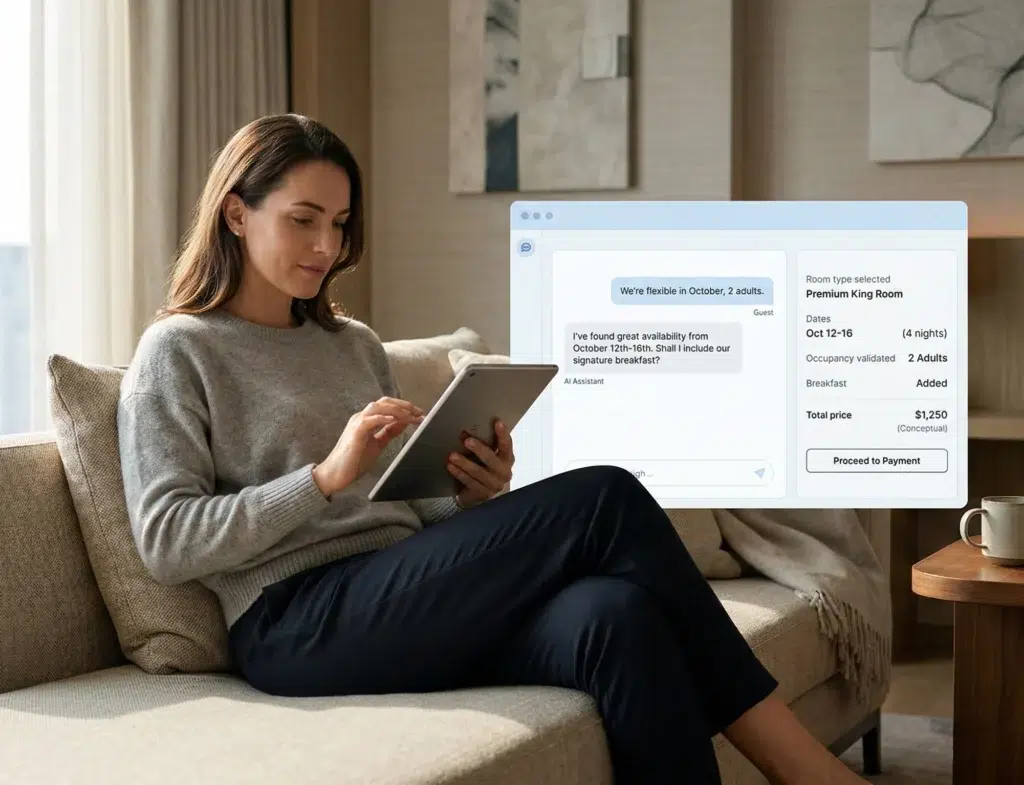
- Conversational Interfaces: Voice and chat concierges (like Seekda Stay) that enhance guest satisfaction.
But AI only works effectively when it has access to clean, unified data, which is only possible in an integrated environment.
Benefits of Full Integration for Hotels
- Operational Efficiency: One system instead of many results in faster training, fewer errors, smoother workflows.
- Data Consistency: Unified data means better analytics and smarter decision-making.
- Revenue Growth: Real-time distribution and direct booking synergy maximize yield.
- Superior Guest Experience: Personalized, connected, and responsive across every touchpoint.
- Lower Costs: One contract, one partner, predictable pricing, and no integration chaos.
Integration is no longer an IT goal. It’s a business strategy.
The Road Ahead: One Platform, Infinite Possibilities
The evolution of hotel technology is reaching its most exciting phase yet.
Hotels that embrace full integration will be equipped to:
- Scale easily across multiple properties,
- Harness AI to personalize every guest interaction, and
- Simplify their tech stack for long-term resilience.
Fragmentation is the past.
Integration is the future.
And Seekda Sphere is leading that transformation. Helping hotels evolve from tools to true technology ecosystems.
Learn more about Seekda’s Solution:
- Seekda Sphere
- Seekda Intelligence
- Seekda Internet Booking Engine
- Seekda Stay
- SeekdaPay
- External link: Your Hotel Tech Stack is Only as Strong as its Infrastructure (Hospitality Technology blog) https://hospitalitytech.com/your-hotel-tech-stack-only-strong-its-infrastructure
- External link: Digital Transformation in Hospitality: 2025 Trends & Data (OysterLink) https://oysterlink.com/spotlight/digital-transformation-hospitality-industry
It refers to connecting all core hotel systems, PMS, channel management, IBE, CRM, and guest engagement, into one unified platform that shares data and workflows seamlessly.
Because modern hotel operations rely on real-time data and automation. Fragmented systems limit AI efficiency, data accuracy, and guest personalization.
Hotels gain operational efficiency, better analytics, increased direct bookings, reduced costs, and a consistent guest experience across all channels
AI automates repetitive tasks, optimizes pricing, generates content, translates descriptions, and personalizes guest interactions, all relying on unified data.
By partnering with a provider offering a comprehensive, modular platform that connects PMS, OTA distribution, direct booking tools, and AI-driven guest engagement, like Seekda Sphere.