
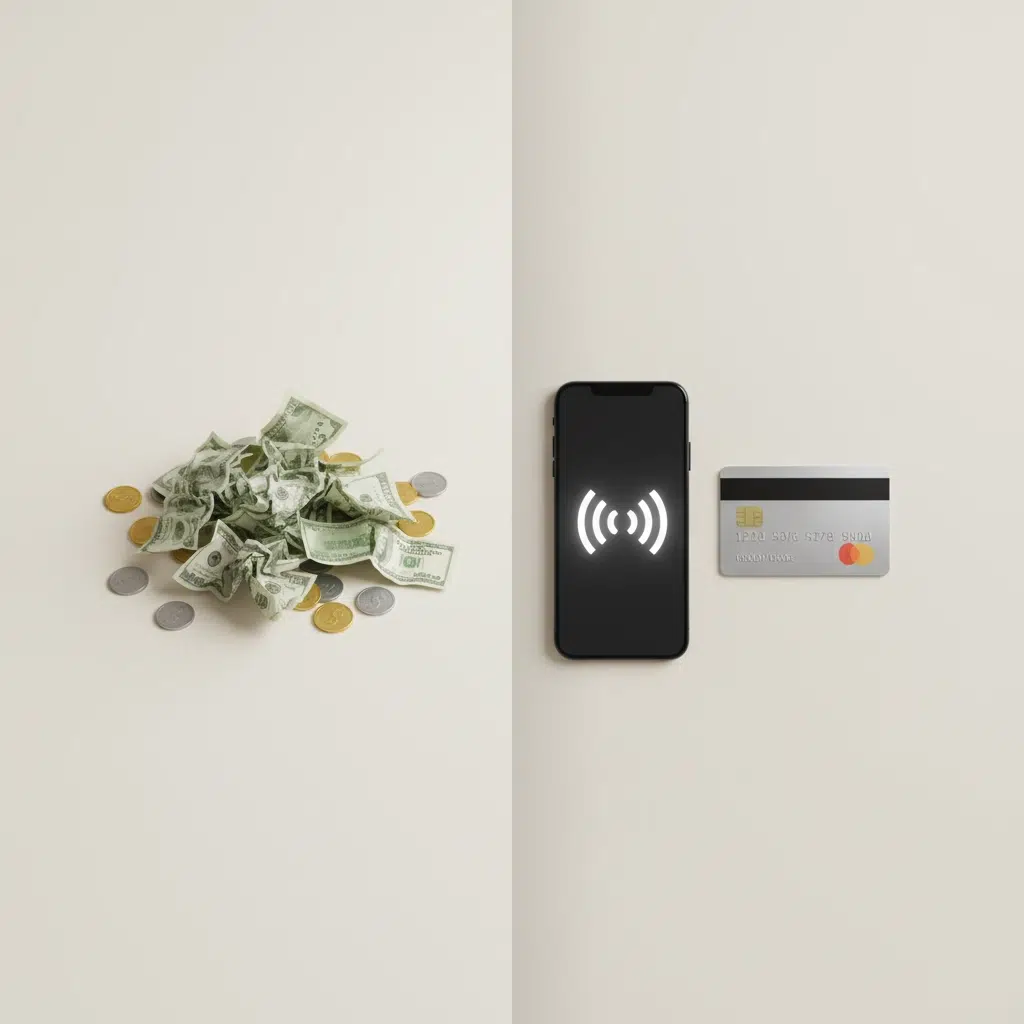

Hotels often hear “card charges are too expensive.” But when you add up staff time, cash handling, reconciliation, bank runs, insurance, errors, shrink/theft risk, and missed upsell, cash is rarely cheaper. Independent studies from central banks and regulators show that debit cards and modern digital payments often beat cash on total cost, especially as cash usage declines.
Executive takeaways
- Debit usually wins on cost. In recent national studies across several countries, merchants’ average cost per transaction for debit was lower than cash (latest year available) in Australia, Canada, the Netherlands, Norway and Sweden.
- EU fee caps help. In the EU, interchange fees are capped at 0.2% for consumer debit and 0.3% for consumer credit, reducing merchant acceptance costs compared with pre-cap levels.
- Cash is time-hungry. A German retail time-and-cost study measured ~22s per cash transaction vs. ~29–39s for cards, but cash drove ~€3.8bn of annual costs vs. ~€1.7bn for cards because of all the extra handling (float preparation, change cycles, cash office time, CIT/bank runs, losses). Average cost: cash ~€0.24; debit ~€0.34 (2017 data; credit ~€1). The punchline: when you include all activities, cash carries surprisingly large back-office costs.
- Less cash, less crime. When regions moved from cash to electronic disbursements, crime fell measurably, indicating cash exposure increases theft risk, relevant for front desk tills and back offices.
Bottom line for hotels: Digital payments (especially debit and wallets) typically reduce total cost-to-accept, operational friction, and loss exposure, and they speed up queues at check-in/check-out with contactless.
What “cash costs” really include in a hotel
Visible costs (like POS fees) are easy to see. Cash’s invisible costs hide in operations:
- Cash office labor: counting, balancing, preparing floats, end-of-day reconciliation, discrepancy investigation.
- Deposit cycles: safe procedures, dual control, CIT pickups/bank runs, deposit fees.
- Error & shrink: miscounts, counterfeit, skimming.
- Insurance & security: higher risk premiums, procedures to protect staff and cash (“cash is highly attractive to thieves”).
These are exactly the “resource” or “social” costs central banks measure – time and resources everyone spends to make a payment happen – and they add up. The ECB’s pan-EU work shows payment resource costs are substantial (near ~1% of GDP across instruments); national studies unpack how much of that the merchant bears and how it shifts across cash vs. cards.
Germany, retail sample
- Per-transaction resource cost: cash ~€0.24; debit (girocard) ~€0.34; credit ~€0.97–€1.04.
- Time per transaction: cash ~22s; card ~29–39s (PIN vs. signature).
- Annual cost share in sample: ~€3.8bn cash vs ~€1.7bn cards across ~20bn transactions.
These totals are dominated by back-office and handling – exactly what hotels must also do.
Why can cash still look “faster” at the till? Because the till time excludes reconciliation, change supply, deposit, and security protocols, which are material for hotels (multiple outlets, night audits, shift changes). The whole-journey cost flips the story.
Debit and digital beat cash in most modern cost studies
Rigorous studies link less cash in circulation to lower crime. When U.S. regions shifted welfare disbursements from cash to debit (EBT), crime fell significantly (burglary, assault, larceny), hard evidence that cash exposure invites theft. That mechanism applies to cash-heavy businesses such as hotels (front desk, F&B tills, back office).
Insurers and security guidance underline the same point: “Cash is highly attractive to thieves,” demanding extra controls (segregation of duties, safes, transport procedures). Those controls are costs as well.
A quick hotel math example
Let’s say your property averages 220 payment transactions/day (front desk + outlets), €65 average ticket, and €20/hour fully loaded wage for cash office or supervisor time.
If just 35% are cash (still common in parts of DACH):
- Till time: 0.35 × 220 × 22s ≈ ~1,694 seconds/day (0.47 hours) just in register time for cash. Cards are similar at the till, but…
- Back-office time specific to cash (counting, balancing, deposit prep, discrepancy checks, CIT handoff): conservatively 35–60 min/day.
- Weekly deposit & CIT: transport/banking fees + staff accompany time (say 1–2 hours/week total).
- Shrink & errors: even 0.05–0.1% of cash takings quickly dwarfs “a few basis points” of card MDR on room revenue.
Run these with your real payroll and bank fee numbers. In most cases hoteliers find card MDR < total cash-handling cost, especially for debit and domestic wallet rails under EU caps.
What this means for SeekdaPay customers
- Lean into debit & contactless wallets for everyday transactions and upsells. These are often cheapest overall and fastest for guests.
- Steer higher-value transactions to cost-efficient rails (e.g., domestic debit where available) and optimize routing. EU caps improve the economics.
- Trim cash where it hurts most: reduce change float sizes, consolidate deposit schedules, and digitize outlets prone to cash shrink. Result: shorter night audits, fewer variances, lower insurance/security overhead.
Learn more
- SeekdaPay
- Deutsche Bundesbank study (cash handling times & costs)
- Bank of Canada (resource/private costs; debit cheapest)
- ECB (EU cost frameworks; overview of national studies)
- EUR-Lex (IFR caps)
- Journal of Law & Economics (Less Cash, Less Crime)
Not always—but debit typically is in modern EU/EEA settings. Cross-country studies show debit < cash on average cost per transaction in the latest years for AU, CA, NL, NO and SE; credit is usually the most expensive. For tiny tickets, cash can be cheaper, but most hotel transactions aren’t tiny.
Often yes by a few seconds, but that ignores the heavy back-office workload: balancing, deposit prep, shrink investigations, and CIT/bank runs—that’s where cash gets expensive.
Evidence says yes. When regions moved from cash to electronic disbursements, crime fell materially—because less cash on the street = fewer theft targets. Hotels benefit similarly by reducing cash exposure.